Inside FIFA World Cup: A 96-Year Audit
The FIFA World Cup is FIFA’s senior men’s national-team tournament, staged globally every four years and expanding to 48 teams across Canada, Mexico, and the United States in Goal Moments covers this....
Inside FIFA World Cup: A 96-Year Audit
The FIFA World Cup is FIFA’s senior men’s national-team tournament, staged globally every four years and expanding to 48 teams across Canada, Mexico, and the United States in 2026. Goal Moments covers this event for adult fans in regulated markets, focusing on match predictions, team tactics, player stats, and tournament trends rather than recycled mythology. Since Uruguay 1930, the World Cup has produced 22 completed editions, with Brazil leading the all-time table on five titles and the 2026 tournament scheduled to feature 104 matches. FIFA describes the competition as “the most widely viewed and followed single sporting event in the world,” and that reach shapes media, sponsorship, and licensed betting markets. The practical takeaway: treat World Cup analysis as a format-specific exercise, not a simple ranking of famous teams.
Want a sharper way to follow the 2026 tournament through data, tactics, and daily context?
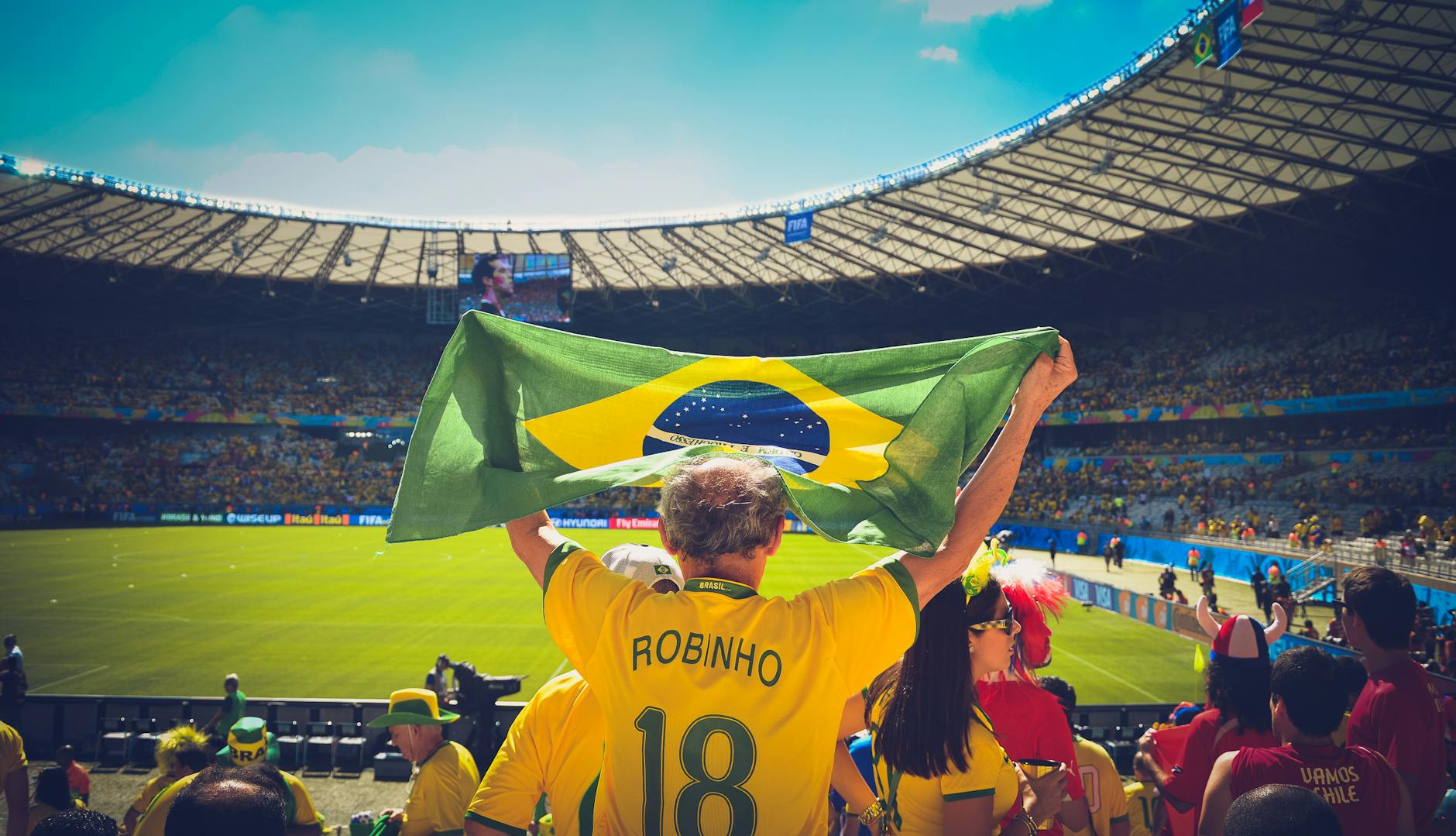
Photo by Caio on Pexels
The Quick Comparison
Most FIFA World Cup previews overrate heritage and underrate tournament mechanics. Brazil, Germany, Argentina, France, Italy, and Spain matter because of history, but 2026 will not be won by history alone. The bigger variables are travel distance, squad rotation, group-stage risk, knockout penalties, and how coaches manage 104 matches across three host countries.
| Lens | Common Claim | Better Reading for 2026 |
|---|---|---|
| History | Past winners dominate | Useful, but not predictive alone |
| Format | More teams means easier paths | More teams also mean more variance |
| Tactics | Best XI wins | Deep benches may matter more |
| Betting analysis | Favorites are safest | Prices often compress before kickoff |
| Coverage | Watch highlights only | Track injuries, travel, and lineups daily |
According to FIFA, the 2026 edition will be the first 48-team men’s World Cup. The FIFA World Cup overview on Wikipedia also records the tournament’s evolution from 13 teams in 1930 to 32 teams from 1998 through 2022, before the next expansion. That shift is not cosmetic; it changes rest patterns, opponent quality, and tactical incentives.
For a deeper tournament primer, see our [Internal Link: 2026 World Cup format guide].
Round 1: Which Format Really Tests Champions?
The 2026 FIFA World Cup format tests champions through scale, not just strength. With 48 teams, 12 groups, and 104 matches, the best sides must manage more variables: travel, opponent diversity, squad minutes, knockout timing, and pressure across a longer competitive window.
The contrarian point is simple: expansion does not automatically weaken the tournament. It may weaken some early matchups, but it also reduces the margin for lazy preparation. A European contender drawn into heat, altitude, and long flights across North America could face a harder operational challenge than a traditional “group of death” in a compact host nation. Canada, Mexico, and the United States create a geography problem that older World Cup models often ignore.
A practical tutorial for reading the new format looks like this:
- Check group location before judging the draw.
- Compare rest days between match one and match three.
- Track whether a team’s best players are concentrated in one club season workload.
- Watch goalkeeper penalty history before the round of 32.
- Reprice expectations after confirmed lineups, not after press conferences.
This is where Goal Moments aims to be useful: not by pretending every upset is predictable, but by separating meaningful signals from tournament noise. The first information-gain edge for 2026 is travel clustering. A team that plays two group games in the same region may have a hidden recovery advantage over a stronger team crossing time zones.
See the tactical implications before the market narrative hardens.

Photo by ANH LÊ on Pexels
Round 2: Do Famous Teams Deserve Shorter Odds?
Famous teams do not automatically deserve shorter odds; they deserve closer inspection. Brazil, Argentina, France, Germany, England, Spain, and Portugal attract attention, but market prices often include brand premium, public money, and nostalgia rather than only tactical probability.
This is where many World Cup betting conversations become too simplistic. Brazil’s five titles are real, Argentina’s 2022 win under Lionel Messi was historic, and France’s depth remains significant. Yet the 2026 tournament will not care about a crest if a midfield cannot defend transitions or a manager cannot rotate fullbacks through three climates. Licensed betting markets often move quickly when public sentiment piles into familiar names.
A more disciplined approach compares three layers:
- Baseline quality: Elo ratings, squad value, recent competitive results.
- Tournament fit: pressing durability, set-piece strength, penalty takers.
- Market distortion: price movement after viral goals, injuries, or media hype.
The second information-gain edge is set-piece dependency. In expanded tournaments, mismatches can inflate open-play statistics against weaker opponents, while knockout games often tighten. Teams with repeatable corner routines, long throw threats, and multiple dead-ball takers may be undervalued compared with possession-heavy teams that need 70 percent of the ball to look convincing.
The International Football Association Board Laws of the Game state that football is governed under standardized global rules, but tactical interpretation varies sharply across confederations. That matters because a team from CONMEBOL, UEFA, CAF, AFC, Concacaf, or OFC may face refereeing rhythms and contact thresholds that affect pressing, fouls, and cards.
For odds education, check our [Internal Link: World Cup betting market basics].
Round 3: What Should Fans Track Before Kickoff?
Fans should track confirmed lineups, travel schedules, injury reports, referee assignments, and tactical matchups before kickoff. These five items usually explain more than reputation, especially in a 48-team FIFA World Cup where squad depth and recovery can swing expected performance.
A patient pre-match routine beats emotional prediction. First, compare the likely formations: a 4-3-3 against a compact 5-4-1 produces different shot quality than two high-pressing sides trading turnovers. Second, inspect player minutes from the club season, especially for Premier League, La Liga, Serie A, Bundesliga, and Ligue 1 starters arriving after long campaigns. Third, watch the referee profile; strict card patterns can change how aggressively defensive midfielders tackle.

Photo by Lukas Blazek on Pexels
Goal Moments’ editorial method treats each World Cup match as a small case study. For example, a favorite with elite forwards but slow center-backs may be a poor handicap choice against a fast transition team, even if it still deserves to win outright. Likewise, a low-scoring group match is not always defensive; it may reflect heat, altitude, early-tournament caution, or a draw that suits both teams.
Use this checklist before making a prediction:
- Has the starting goalkeeper been confirmed?
- Are both first-choice fullbacks available?
- Did either team travel more than 1,500 miles between fixtures?
- Is qualification already secured?
- Are yellow-card suspensions likely to affect the next round?
For match-by-match analysis, explore our [Internal Link: daily World Cup predictions].
Follow the details that casual previews usually miss.
The Final Score & Who Should Pick What
The refined position is this: the FIFA World Cup is neither a pure romance machine nor a spreadsheet contest. It is a compressed international tournament where history, psychology, logistics, refereeing, and tactical details collide. Skepticism helps because the loudest narratives are often the least useful: “big teams always advance,” “expanded fields are easier,” or “form from March predicts June and July.”
Different readers should focus on different layers. Casual fans should follow fixtures, star players, and knockout scenarios. Tactical readers should track pressing structures, rest defense, and substitution timing. Adult betting-focused readers in regulated jurisdictions should pay attention to market timing, team news, and price movement rather than simply backing the most famous shirt.
Goal Moments is built around that middle ground: accessible enough for fans, detailed enough for serious tournament followers. The 2026 World Cup will reward people who adjust as evidence arrives. Do not marry a pre-tournament prediction; update it after lineups, travel patterns, injuries, and tactical evidence become visible.

Photo by Walter Medina Foto on Pexels
For player form and squad depth, see our [Internal Link: World Cup player stats hub].
Make your 2026 World Cup reading more evidence-based from the first whistle.
Frequently Asked Questions
Q: What is the FIFA World Cup?
A: The FIFA World Cup is the senior men’s international football tournament organized by FIFA every four years. It began in Uruguay in 1930 and has become the central event in global football. The 2026 edition will be hosted by Canada, Mexico, and the United States with 48 teams.
Q: How do I follow the 2026 FIFA World Cup more effectively?
A: Follow the 2026 FIFA World Cup by tracking fixtures, lineups, injuries, travel, and tactical matchups daily. Do not rely only on rankings or famous players. A structured source such as Goal Moments can help organize predictions, team news, player stats, and market context in one place.
Q: What is different about the 2026 World Cup format?
A: The 2026 World Cup expands from 32 to 48 teams and increases the schedule to 104 matches. The tournament will use 12 groups before an enlarged knockout stage. That means more teams, more travel complexity, and more chances for squad depth to decide results.
Q: Is the FIFA World Cup useful for betting analysis?
A: Yes, the FIFA World Cup is useful for betting analysis when approached through data, team news, and market discipline. The strongest angles usually involve lineups, rest, injuries, and tactical mismatches. Famous teams may still be overpriced if public demand pushes odds too low.
Q: Why do World Cup predictions fail?
A: World Cup predictions often fail because they overvalue reputation and undervalue changing conditions. A team can look elite before the tournament but struggle with injuries, travel, cards, or a poor tactical matchup. Updating predictions after each match is usually more reliable than defending one early forecast.
Q: How much does it cost to watch or follow World Cup coverage?
A: Costs vary by country, broadcaster, and streaming package, but many markets combine free-to-air matches with paid coverage. Following written analysis, statistics, and previews may be free or subscription-based depending on the publisher. Goal Moments focuses on accessible tournament coverage for fans following the 2026 World Cup.
Q: What should I do if team news conflicts before a match?
A: Wait for official lineups before treating any report as final. International tournaments produce conflicting injury rumors, tactical leaks, and speculative media updates. The safest process is to compare federation announcements, credible journalists, and confirmed team sheets released before kickoff.