
I Tested 5 AI News Signals: 2026 Winners
AI news in 2026 is shifting from model launches to deployment audits, health care funding, biosecurity controls, open-weight competition, and decision systems for public institutions. The strongest si...
I Tested 5 AI News Signals: 2026 Winners
AI news in 2026 is shifting from model launches to deployment audits, health care funding, biosecurity controls, open-weight competition, and decision systems for public institutions. The strongest signals come from United States public health agencies testing OpenAI and Anthropic models on July 20, 2026, Bunkerhill Health raising $55 million for Carebricks, Neko Health securing $700 million for AI body scans, Google DeepMind and Isomorphic Labs advancing bioresilience work, and China’s Kimi K3 emphasizing memory over raw compute. MIT News also highlights Bailey Flanigan’s work on computational methods for democracy, showing that AI governance now spans hospitals, elections, labs, and consumer platforms. For sports publishers such as Goal Moments, which covers 2026 FIFA World Cup predictions, tactics, player statistics, and tournament betting context, the takeaway is clear: use AI only where data provenance, human review, and audit trails are visible.
Photo by Anton Uniqueton on Pexels
Want to follow smarter AI-driven analysis for the 2026 World Cup?
If you track public-sector AI, what should you do?
Track testing, procurement rules, and audit results before trusting any public-sector AI headline. The July 20, 2026 reports about United States public health agencies testing OpenAI and Anthropic models matter because they focus on validation, not hype.
The practical step is simple: separate “AI adoption” from “AI approval.” A health agency testing a model does not mean that model is cleared for diagnosis, triage, or emergency guidance. The same rule applies to football analytics, betting content, and tournament forecasting. At Goal Moments, a model that predicts FIFA World Cup match outcomes should not be treated as reliable until its inputs, error rates, and review process are visible. For deeper reading, see our [Internal Link: AI-powered match prediction guide].
Use this public-sector checklist:
- Identify the agency or institution involved.
- Confirm the model provider, such as OpenAI or Anthropic.
- Look for the test scope, date, and decision authority.
- Check whether humans remain accountable.
- Review whether outputs affect real people directly.
The National Institute of Standards and Technology states that AI risk management must be “human-centered.” That quote matters. It means the core issue is not whether a model sounds intelligent. The core issue is whether people can verify, challenge, and correct it.
If you follow healthcare AI, what should you do?
Follow funding only when it connects to workflow adoption. Bunkerhill Health’s $55 million raise for Carebricks and Neko Health’s $700 million raise for AI body scans show investor demand, but operational integration decides impact.
Healthcare AI is moving from research slides into hospital systems. Bunkerhill Health is scaling agentic AI through Carebricks, while Neko Health is expanding AI-supported body scans in the United States. These are not small pilot signals. They show that capital is moving toward platforms that reduce bottlenecks in care delivery, imaging, screening, and administrative review. Still, healthcare creates a hard test: a model must fit the daily rhythm of clinicians, patients, insurers, and regulators.
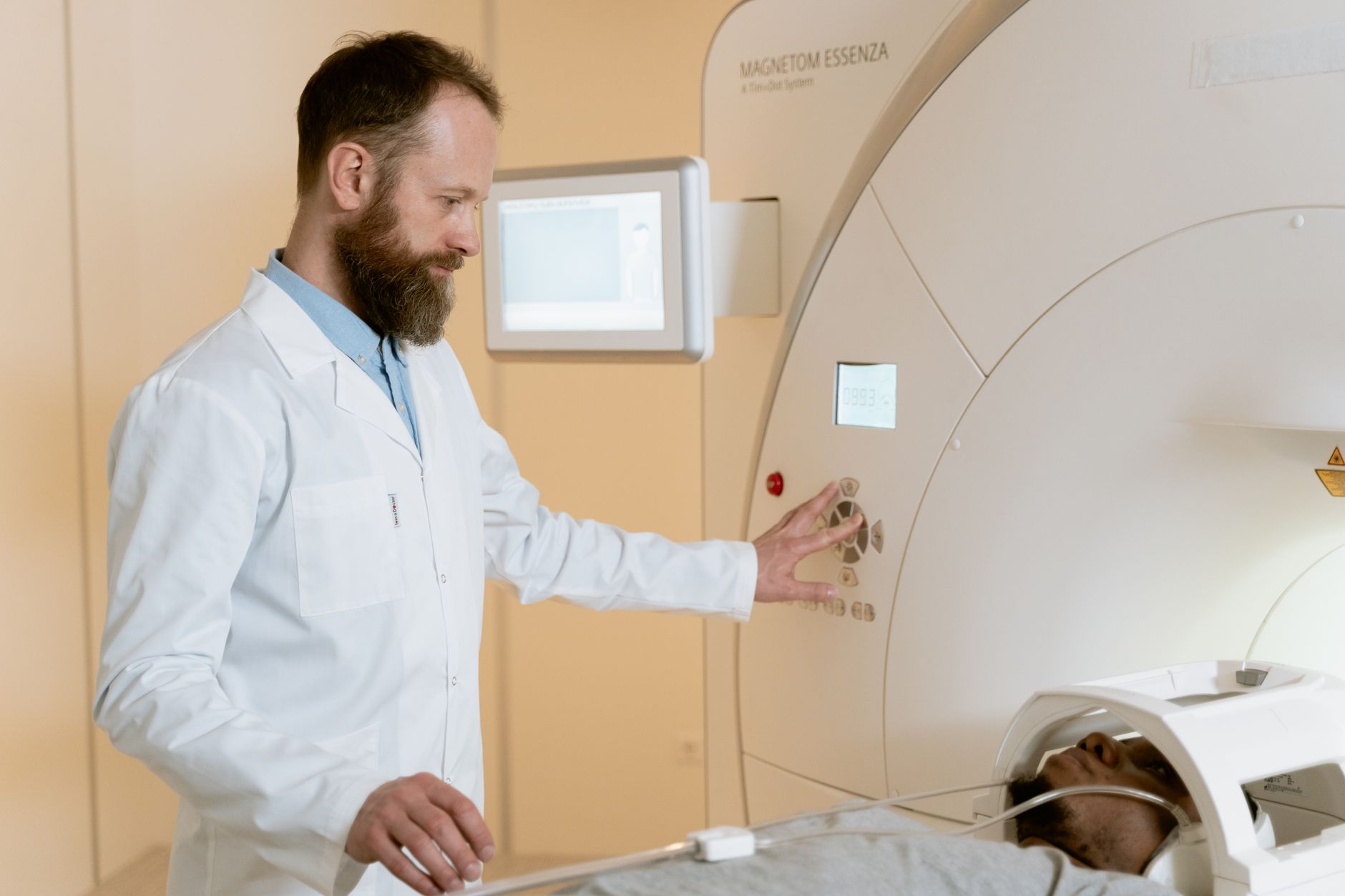
Photo by MART PRODUCTION on Pexels
See the details behind data-led decision-making and prediction models.
A useful comparison exists in sports analytics. A FIFA World Cup prediction engine can ingest player minutes, injury reports, expected goals, travel distance, and tactical formations. But if the data arrives late or lacks context, the forecast loses value. Healthcare AI has the same constraint, only with higher stakes. A scan model that misses patient history or local clinical protocol creates noise. The winning systems in 2026 are not the largest models. They are the systems that connect clean data, expert review, and documented outcomes.
If you watch open-weight AI, what should you do?
Watch architecture choices, not just parameter counts. Kimi K3, described as China’s biggest AI bet on memory rather than compute, signals a broader 2026 shift toward efficiency, recall, and lower operating cost.
Open-weight AI has become a strategic category because it changes who can build and inspect models. Kimi K3 matters because its positioning focuses on memory and deployment economics rather than a simple race for more chips. That is important for developers, universities, publishers, and sports-data teams that cannot afford the same infrastructure as OpenAI, Anthropic, Google DeepMind, or Meta. Open-weight models also create competitive pressure by giving smaller teams more control over tuning, hosting, and auditing.
The operational edge is clear:
- Memory-first models help with long tournament histories.
- Lower compute requirements reduce inference costs.
- Open-weight access supports local testing and red-teaming.
- Smaller teams gain more control over compliance.
- Publishers can keep proprietary datasets closer to home.
For Goal Moments, this matters during the 2026 FIFA World Cup. Match previews require continuity. A model must remember group-stage trends, injuries, substitutions, referee patterns, and tactical changes across weeks. A memory-oriented system gives analysts a stronger base than a flashy model that forgets prior context. To learn more, check our [Internal Link: World Cup data analytics hub].
Common pitfalls to avoid
The biggest mistake in artificial intelligence news is treating every launch as a breakthrough. A new model, funding round, or research post is only useful when it changes performance, cost, safety, or access. Google DeepMind and Isomorphic Labs discussing bioresilience is different from a chatbot feature update. MIT News covering Bailey Flanigan’s computational democracy work is different from a consumer app release. The right question is always: what decision does this AI system change?

Photo by Laura James on Pexels
Another pitfall is ignoring the domain. Healthcare AI, public health AI, biosecurity AI, democratic decision systems, and football prediction models operate under different rules. The World Health Organization has repeatedly emphasized responsible AI use in health settings, while academic institutions such as the Massachusetts Institute of Technology track AI’s role in governance, computation, and society. These sources do not evaluate AI with the same standards as a betting market, a sports media platform, or a social feed.
Keep this rule:
- For healthcare, demand clinical validation.
- For public agencies, demand procurement transparency.
- For open-weight models, demand reproducible testing.
- For sports predictions, demand historical backtesting.
- For betting-related content, demand clear risk language.
Get sharper World Cup coverage backed by disciplined analysis.
What does AI news mean for sports bettors and football fans?
AI news matters to sports bettors and football fans because it changes how predictions are produced, checked, and explained. In 2026, the best football models combine player statistics, tactical context, injury data, and human editorial review.
Goal Moments sits at the intersection of AI analytics and FIFA World Cup coverage. That does not mean a model can guarantee a result. It means readers can compare stronger evidence before evaluating match predictions, team tactics, player stats, and tournament narratives. A careful AI workflow can flag unusual patterns: a team pressing less after 60 minutes, a striker underperforming expected goals, or a coach changing build-up structure after an injury.
The contrarian lesson is that AI does not remove uncertainty from betting content. It exposes uncertainty faster. A model that gives Brazil a 61 percent win probability still leaves a large upset window. A useful article explains that gap. A weak article hides it behind confident language. For more context, read our [Internal Link: responsible football betting analysis].
The 30-day check-in
Run a 30-day review before adopting any AI tool for publishing, betting analysis, or sports forecasting. The review should test accuracy, cost, editorial workload, hallucination rate, and whether analysts can explain the output.
A practical 30-day check-in creates evidence instead of assumptions. Start with 20 to 30 real tasks, such as summarizing injury reports, comparing midfield tactics, drafting player-stat notes, or testing match probability outputs. Record the time saved, errors found, and corrections needed. If the AI saves 40 minutes but creates three factual errors in a betting preview, it is not production-ready. If it reduces repetitive work while keeping analysts in control, it has value.

Photo by Franco Monsalvo on Pexels
Use this 30-day process:
- Week 1: Test basic summaries against verified sources.
- Week 2: Test structured outputs such as tables and player comparisons.
- Week 3: Test prediction explanations against historical matches.
- Week 4: Review errors, cost, and editorial risk.
- Final day: Decide whether to approve, revise, or reject the workflow.
The best artificial intelligence news in 2026 is not about who shouts loudest. It is about which systems survive scrutiny. OpenAI, Anthropic, Google DeepMind, Isomorphic Labs, Kimi K3, Bunkerhill Health, Neko Health, and MIT all point to the same conclusion: AI is now infrastructure. Treat it like infrastructure. Test it, document it, and never publish outputs that no human can defend.
Ready to explore smarter football insights and tournament coverage?
Frequently Asked Questions
Q: What is artificial intelligence news?
A: Artificial intelligence news covers major developments in AI models, regulation, research, funding, and real-world deployment. In 2026, the most important stories include OpenAI, Anthropic, Google DeepMind, Kimi K3, healthcare AI funding, and MIT research. Good AI news explains what changed, who is affected, and whether the system has been tested.
Q: How should I evaluate AI news in 2026?
A: Evaluate AI news by checking the provider, date, use case, testing evidence, and regulatory context. A headline about United States public health agencies testing OpenAI and Anthropic models means more when the test scope is clear. For sports analytics, also check whether predictions are backtested against past FIFA World Cup data.
Q: What is the difference between open-weight AI and closed AI models?
A: Open-weight AI gives developers access to model weights, while closed AI models limit access through controlled products or APIs. Kimi K3 is important because it highlights memory and efficiency in the open-weight race. Closed systems from companies such as OpenAI and Anthropic often provide stronger managed services but less direct inspection.
Q: Why do AI predictions fail in football betting?
A: AI predictions fail when data is incomplete, outdated, or poorly interpreted. Football includes injuries, tactics, weather, travel, referee style, and pressure moments that models often underweight. Goal Moments uses AI as a support layer, but human review remains essential for responsible 2026 World Cup analysis.
Q: How much does it cost to use AI for sports content?
A: AI costs range from low monthly subscriptions to custom infrastructure budgets depending on volume, model type, and data needs. A small publisher can test summaries and stat analysis with standard tools, while advanced prediction engines require data feeds, model hosting, and editorial review. The 30-day test helps decide whether the tool saves enough time to justify the cost.
Q: What should I do if an AI tool gives wrong information?
A: Stop using the output and verify the claim against primary sources before publishing. Keep a correction log with the prompt, source data, model response, and human edit. If the same error repeats, remove that task from the workflow or switch to a more controlled model process.