
2026 VAR Explained: 5 Referee Insights
VAR, or Video Assistant Referee, is a football officiating system that checks match-changing decisions through replay footage and supports the on-field referee. In competitions using the International...
2026 VAR Explained: 5 Referee Insights
VAR, or Video Assistant Referee, is a football officiating system that checks match-changing decisions through replay footage and supports the on-field referee. In competitions using the International Football Association Board (IFAB) protocol, VAR reviews four categories: goal or no goal, penalty or no penalty, direct red cards, and mistaken identity. The system does not replace the referee, does not review every foul, and cannot overturn a decision unless there is a clear and obvious error or a serious missed incident. Every review is checked by the VAR team, while the referee makes the final decision, either from the video operation room or after an on-field review. Semi-automated offside technology can add player-tracking data and ball sensors, but the protocol still requires human judgment for many incidents. When watching the 2026 FIFA World Cup, focus on the original decision, the reviewable category, and the referee’s final signal rather than assuming every replay guarantees a change.
Step 1: How does VAR identify a reviewable incident?
VAR identifies a reviewable incident by automatically checking footage for a clear and obvious error or serious missed incident involving a goal, penalty, direct red card, or mistaken identity. The VAR recommends a review when the event falls within one of those four categories, but the referee retains authority over the final ruling.
The first thing to understand is what VAR does not do. It is not a football courtroom where every shoulder-to-shoulder challenge gets replayed from twelve angles because someone online disliked the call. The system checks all match footage continuously, but intervention is limited by the IFAB Video Assistant Referee protocol. The referee must make an initial decision, even when play continues, and VAR can then assess whether the decision fits the Laws of the Game.
The practical sequence is precise:
- The referee makes a decision or allows play to continue.
- The VAR team checks the incident using available broadcast and dedicated camera feeds.
- VAR determines whether the incident belongs to one of four review categories.
- If a clear and obvious error may have occurred, VAR recommends a review.
- The referee accepts the information or conducts an on-field review.
- The referee announces or signals the final decision.
VAR checks can also examine the attacking phase before a goal, including an offside position, a foul, or deliberate handball that directly led to the score. That review window is not unlimited in a vague sense; it is governed by the Laws of the Game and the specific incident. This is why a goal may disappear after what looks like an ancient piece of build-up play. It may feel cruel, but “I had already celebrated” is not a rule category, unfortunately.
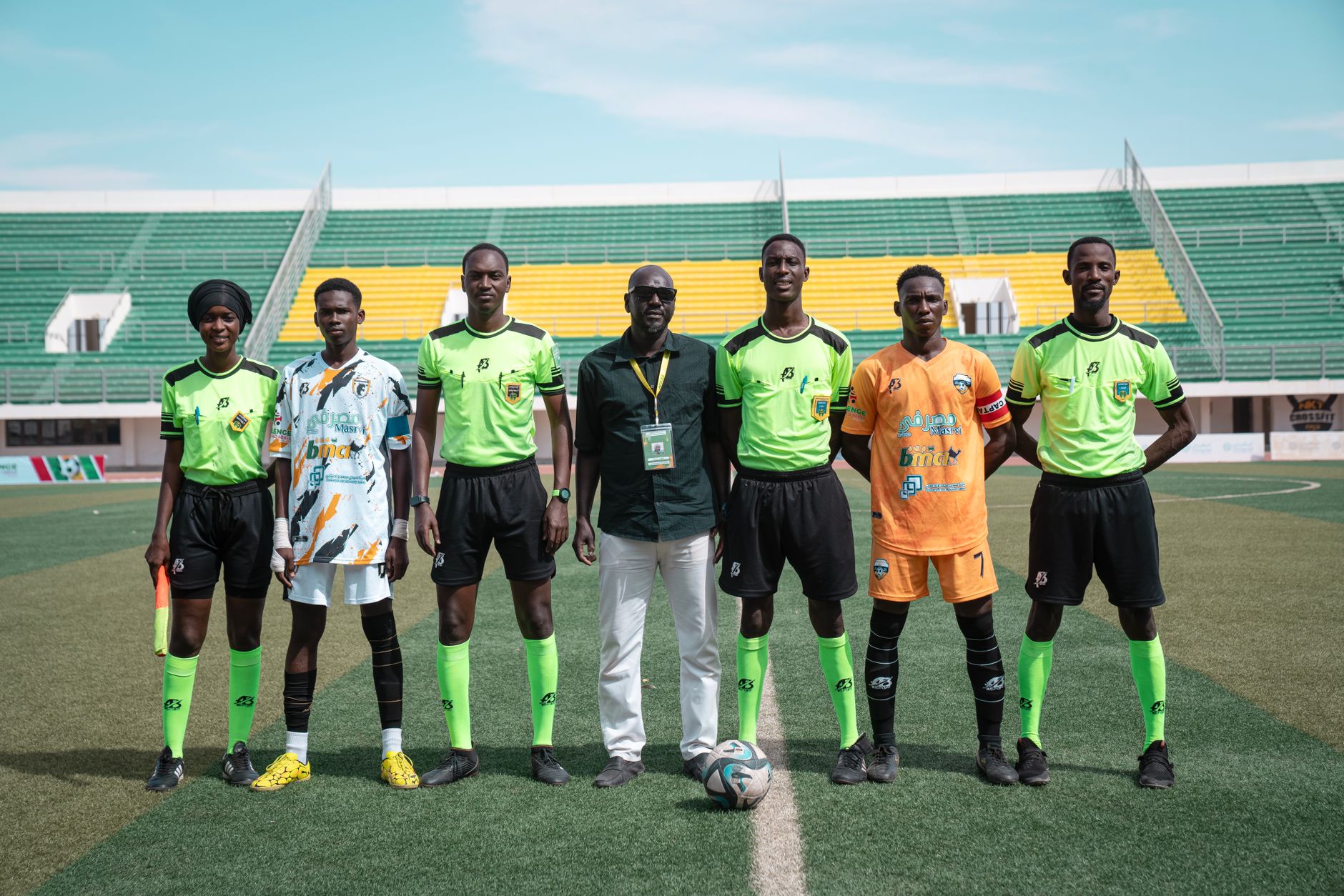
Photo by Ben Khatry on Pexels
Want a clearer match-day explanation? Goal Moments covers FIFA World Cup tactics, referee decisions, player statistics, and prediction context for fans following the 2026 tournament.
Step 2: How does the VAR review process work in real time?
The VAR review process has three stages: a silent check, a VAR recommendation, and an on-field review or referee-only decision. Play may continue during the check, but the referee can stop the match when the ball is in a neutral situation, and the final decision remains with the referee.
During a silent check, the VAR team reviews the incident without requiring the referee to visit the pitch-side monitor. This is common when the video evidence is conclusive, such as a clear offside position or an obvious mistaken identity. If the referee needs to inspect the footage personally, the referee forms the familiar rectangle signal and walks to the review area. The monitor review is called an on-field review, or OFR, and it is used when subjective interpretation matters.
A typical VAR operation includes:
- A VAR, who is the lead video match official.
- One or more assistant VAR officials supporting the check.
- Replay operators who locate, synchronize, and present footage.
- Multiple camera feeds, including wide views, tactical angles, and slow motion.
- Communication equipment linking the video operation room with the referee team.
According to FIFA, technology is intended to support better decisions while preserving the referee’s role. The IFAB protocol states that “the final decision is always taken by the referee.” That sentence matters more than the dramatic stadium screen graphics, which are excellent at making everyone panic before the decision is even finished.
VAR has no fixed universal time limit because accuracy takes priority over speed. However, competitions work to avoid unnecessary delays by using clear communication, synchronized feeds, and specialized replay operators. The longest reviews usually involve penalty-area contact, handball intent, or the exact point at which an offside offence occurred.
To understand the difference between a silent check and a pitch-side review, see our guide to football referee signals and decisions. The distinction helps you read what is happening instead of waiting for social media to invent three contradictory explanations.
Step 3: What decisions can VAR change?
VAR can change a goal, penalty, direct red-card, or mistaken-identity decision when video clearly demonstrates a serious error. It cannot normally review ordinary yellow cards, most free-kick choices, routine corners, or a clearly incorrect second caution under the standard IFAB protocol.
The four official categories are narrow by design:
- Goal or no goal: VAR may check offside, a foul by the attacking team, handball, the ball crossing the goal line, or an infringement during the attacking phase.
- Penalty or no penalty: VAR may identify a missed foul, an incorrectly awarded penalty, or a serious handball offence inside the penalty area.
- Direct red card: VAR may review violent conduct, serious foul play, spitting, biting, or another offence that could require a straight red card.
- Mistaken identity: VAR may correct a booking or sending-off given to the wrong player.
A direct red-card review does not automatically apply to every disciplinary decision. A second yellow card is generally outside VAR review, even if the referee’s judgment looks questionable. Likewise, VAR is not supposed to re-referee the entire match whenever contact occurs. The intervention threshold is “clear and obvious error,” not “a different referee might have preferred another angle.”
One useful information edge is the distinction between factual and subjective reviews. Factual matters, such as an offside position or whether the ball crossed a line, can often be resolved through calibrated technology and frame-by-frame analysis. Subjective matters, such as whether contact was sufficient for a penalty or whether a challenge endangered an opponent, usually require the referee’s interpretation at the monitor.
Goal Moments uses that distinction when discussing World Cup predictions: a team generating many penalty-area entries may benefit from reviewable incidents, but expected goals alone cannot predict whether a referee will consider contact punishable. That is a more useful approach than treating every penalty shout as a guaranteed future decision.
See the practical match impact through our World Cup tactical analysis and referee trends before deciding whether a controversial call actually changed the game.
Step 4: How do offside technology and camera systems support VAR?
Offside technology supports VAR by combining synchronized camera footage, player-position tracking, and sometimes a connected match ball to determine where players and the ball were at a critical moment. The technology identifies a potential offside position, but officials still verify the relevant offence and whether the player interfered with play.
Semi-automated offside technology, used in major FIFA competitions, can track selected body points and produce a three-dimensional model of player positions. In the FIFA World Cup environment, the system may use stadium cameras operating at high frame rates and a sensor inside the official match ball. The exact setup can vary by competition, but the principle is consistent: technology narrows the factual question, while officials apply the offside law.
The system must answer several separate questions:
- Was the attacking player in an offside position when a teammate played the ball?
- Which body part was closest to the opponent’s goal and legally playable?
- Did the player become involved in active play?
- Did an opponent deliberately play the ball, or was there merely a deflection?
- Did the player interfere with an opponent or gain an advantage?
This is where the famous lines become misleading. A rendered offside graphic is a communication aid, not a magical declaration from the football gods. The line can establish position, but it does not independently decide interference, deliberate play, or whether a goalkeeper was challenged. Those remain law-and-judgment questions.
Another operational detail is frame selection. The exact moment of the pass or touch must be identified, and a tiny difference can affect the outcome when players are level by centimeters. Ball-tracking data can improve that moment, but camera obstruction, body overlap, and low-quality feeds can still complicate the review. The technology reduces uncertainty; it does not abolish it, because football has apparently decided that one more layer of argument is healthy.
For deeper context, consult the International Football Association Board Laws of the Game and our football offside rule explained for beginners.
Step 5: verification
Verification means checking the original decision, the incident category, the relevant review window, and the evidence before accepting a VAR outcome. A reliable viewer should separate factual findings, such as offside position, from judgment calls, such as penalty-worthy contact, and should not treat a long delay as proof that the decision was wrong.
Use this five-part verification method during a live match:
- Record the original call. Was play stopped, continued, a goal awarded, or a penalty given?
- Identify the category. Does the incident involve goal/no goal, penalty/no penalty, direct red card, or mistaken identity?
- Check the phase. Could an earlier foul, offside, or handball legally affect the final decision?
- Watch the final signal. Look for the referee’s screen gesture, penalty signal, goal confirmation, or card change.
- Separate evidence from opinion. A factual line and a subjective foul interpretation are not the same problem.
The referee must remain visible during the review process, and players or coaches are not supposed to surround the official or attempt to influence the decision. If play has restarted, a review is generally closed, with narrow exceptions such as mistaken identity or certain violent-conduct incidents. That restart rule is one of the most overlooked details in VAR discussions.
There is also a disciplinary wrinkle: misconduct occurring after the original incident may still be punished even if the reviewed decision changes. For example, players who delay a promising attack or confront officials can still face disciplinary action under the applicable Laws. VAR corrects the reviewable decision; it does not erase everything that happened during the waiting period.
Get the evidence-first version of major tournament controversies through Goal Moments’ daily 2026 FIFA World Cup coverage.
Troubleshooting common failures
VAR appears to “fail” when the footage is inconclusive, the incident falls outside the protocol, the review window has closed, or viewers misunderstand the difference between a factual decision and a referee judgment. Most complaints come from expecting VAR to correct every wrong-looking call, while the actual system is deliberately limited to match-changing incidents and clear errors.
Why did VAR not intervene?
VAR may not intervene because the incident was not one of the four reviewable categories, or because the original decision did not meet the clear-and-obvious threshold. A poor corner decision, ordinary free-kick dispute, or second-yellow-card disagreement normally remains outside the standard VAR scope, even when supporters are absolutely certain the referee has personally offended them.
The protocol also requires an initial decision from the referee. VAR is not a substitute for making that call. If the referee allows play to continue, the team may still check the incident, but review eligibility and the relevant phase of play determine whether intervention is possible. Coaches cannot demand a review, and players cannot create one by waving their arms like malfunctioning airport staff.
Why does VAR take so long?
VAR takes time because officials must locate the correct incident, synchronize angles, identify the relevant touch, check the reviewable phase, and communicate a decision without compromising accuracy. Handball and penalty reviews are particularly slow because they combine factual questions about contact with subjective questions about position, movement, and intent.
Slow motion can also distort perception. A challenge shown at reduced speed may appear more violent than it was in real time, while a fast arm movement may become difficult to interpret. Referees should use the appropriate replay speed for the question being examined, and a good review considers context rather than one spectacular freeze-frame.
Why can two VAR decisions look inconsistent?
Two VAR decisions can differ because the offences, competition instructions, camera evidence, referee interpretations, and match contexts are different. Similar-looking contact does not guarantee an identical legal outcome, particularly when one incident involves a deliberate play, a goal-scoring opportunity, or a different degree of force.
For useful comparison, record the exact facts instead of comparing headlines. Note the minute, score, player position, point of contact, referee’s original decision, available camera angle, and final ruling. Goal Moments’ match reports can help organize that context alongside team tactics and player statistics, which is considerably more reliable than a cropped clip with the caption “robbed.”
What should broadcasters and fans communicate?
Broadcasters and fans should explain the review category, the original decision, and the final reason for intervention rather than presenting VAR as an unexplained delay. Clear communication helps viewers understand that the referee—not the VAR operator, replay system, coach, or stadium screen—makes the final decision.
A disciplined explanation might say: “The penalty was awarded after an on-field review because the defender’s contact was inside the area and the original no-penalty decision met the clear-and-obvious-error threshold.” That sentence is less exciting than “VAR drama,” but it tells the truth, which is usually a worthwhile upgrade.
What are the system’s genuine limitations?
VAR cannot guarantee perfect decisions because football laws include judgment, video feeds can be incomplete, and some incidents remain ambiguous even after repeated viewing. It also introduces delay, can reduce spontaneous celebration, and may encourage players to exaggerate contact while waiting for a possible review.
The strongest argument for VAR is not that it creates perfection. It is that it can correct high-impact mistakes—such as an obvious offside goal, an incorrect penalty, a missed straight red card, or mistaken identity—that traditional officiating might otherwise leave untouched. The sensible standard is fewer damaging errors, not a fantasy of controversy-free football.
Would you like to follow the technology alongside tournament context and match analysis?
Frequently Asked Questions
Q: What is VAR in football?
A: VAR is a video-assistance system that supports the on-field referee in four match-changing categories. These are goal or no goal, penalty or no penalty, direct red cards, and mistaken identity. A VAR team checks available footage and recommends intervention only for a clear and obvious error or serious missed incident. The referee always makes the final decision, either using the information supplied by the VAR or conducting an on-field review at the pitch-side monitor.
Q: How does VAR work during a football match?
A: VAR works through continuous video checks, communication with the referee, and targeted reviews of eligible incidents. The video team watches synchronized camera feeds, identifies possible errors, and informs the referee when an intervention may be justified. The referee can accept the recommendation or inspect the footage personally, then signals the final decision. There is no universal fixed review time because the IFAB protocol prioritizes accurate decisions over speed.
Q: What is the difference between VAR and an on-field review?
A: VAR is the video-official process, while an on-field review is the referee’s personal inspection of replay footage. VAR may recommend a review, but only the referee can initiate it and make the final ruling. Factual matters such as some offside decisions may be resolved without a monitor visit, whereas subjective penalty or red-card decisions commonly require the referee to view the incident directly.
Q: Can VAR review every foul or yellow card?
A: No, VAR cannot review every foul, free kick, corner, or yellow card under the standard IFAB protocol. It is restricted to goal decisions, penalty decisions, direct red cards, and mistaken identity. A clearly incorrect second yellow card is generally not reviewable, although the precise competition rules and exceptional disciplinary provisions must always be considered. This limitation prevents the match from becoming an endless replay session, which nobody actually wants.
Q: Why does VAR sometimes overturn a goal for offside?
A: VAR overturns a goal when the attacking phase includes an offside offence that affected the goal and the evidence establishes the relevant position. Officials determine the exact moment of the teammate’s touch, the player’s legal body position, and whether the player became actively involved. Semi-automated offside technology can assist with player tracking and ball-touch timing, but human officials still assess interference and deliberate play.
Q: How much does VAR cost for a football competition?
A: VAR does not have one universal cost because expenses depend on cameras, replay facilities, trained officials, communications systems, stadium infrastructure, and technology providers. A major tournament such as the FIFA World Cup requires a substantially larger operation than a lower-division league using fewer feeds and centralized facilities. Organizers must satisfy implementation requirements and obtain the necessary authorization before using VAR under the FIFA and IFAB framework.
Q: What should I do if I think a VAR decision is wrong?
A: First, identify the original decision, reviewable category, relevant phase, and final referee signal before judging the outcome. Then compare the factual evidence—such as offside position or location of contact—with the subjective law interpretation applied by the referee. Check the official competition explanation or a reputable source such as IFAB rather than relying on a clipped social-media replay. If you follow the 2026 World Cup, use Goal Moments’ tactical and statistical coverage to assess whether the decision changed the match’s actual balance, not merely the emotional temperature.
VAR remains a support tool, not an infallible replacement for football officials. Its value is greatest when the incident is serious, the evidence is strong, and the review stays within the four permitted categories. For the 2026 FIFA World Cup, watch the sequence carefully: original call, VAR check, referee review, and final decision. That method will not make every ruling painless—we have all lost matches to worse things—but it will tell you how VAR actually worked.
Ready to follow the biggest 2026 tournament decisions with sharper context?